
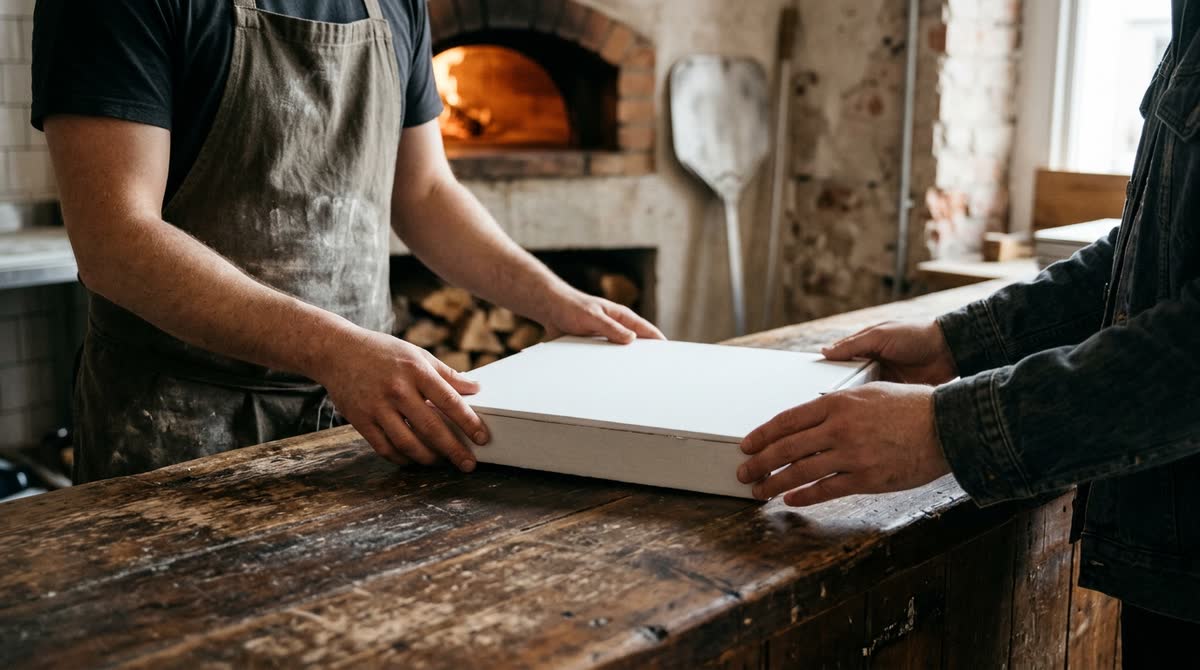
Make your own ordering link the easiest one to find on Google and your website, give guests one clear reason to use it, such as a lower price or rewards that count only on direct orders, and ask the guests you already serve to switch. Keep DoorDash for people who discover you there, and put your effort into regulars, who already know your name and don't need an app to find you.
Do customers actually want to order directly?
Many do, yet most delivery customers still use the apps. In the National Restaurant Association's 2026 State of the Restaurant Industry report, 75% of delivery customers said they had ordered through a third-party service in the past six months, while 56% said they would rather order directly through the restaurant.
Age changes the picture: 80% of baby boomers preferred ordering direct, against 57% of Gen X, 51% of millennials and 44% of Gen Z adults. Expect some guests to stay on the app whatever you do.
Part of the gap sits on the restaurant's side. Counting all operators in that report, including those with no delivery at all, 38% of limited-service and 21% of full-service restaurants let customers order delivery both through a third-party service and directly, while 15% and 13% offer it through a third party only. If you are in that second group, a direct path is your first job.
What does a direct order cost you compared with DoorDash?
Start with the math, because it decides how much you can afford to offer guests. These are the rates listed on DoorDash's US pricing page on November 3, 2026, applied to a $40 order subtotal. Rates change, so check that page and your own agreement.
| How the order comes in | Commission rate | Commission on $40 |
|---|---|---|
| DoorDash app, delivery, Basic plan | 15% | $6.00 |
| DoorDash app, delivery, Plus plan | 25% | $10.00 |
| DoorDash app, delivery, Premier plan | 30% | $12.00 |
| DoorDash app, pickup, any plan | 6% | $2.40 |
| Online Ordering by DoorDash, on your own channels | 0% | $0, plus payment processing |
The last row is not the whole cost of a direct order. DoorDash says its commission also covers listing and marketing, Dasher logistics, customer support and credit card processing. On a direct order some of those costs move to you or to the guest: card processing, ordering software, the offer that persuaded the guest to switch, and delivery if you run it.
DoorDash also argues on that page that its orders are often incremental, so the comparison is often delivery margin against no order at all. That holds for a stranger who found you in the app. It holds much less for a regular who lives three blocks away, which is why regulars are the guests to move first.
Operators are split on profit. In a preliminary National Restaurant Association survey with 830 responses, dated May 14, 2026, and included in its May 2026 comment to the Federal Trade Commission, 47% of full-service and 43% of limited-service operators offering third-party delivery said those orders are not profitable for them. The rest said they are, so run your own numbers.
Where should your direct ordering link show up?
First you need an ordering page that works well on a phone. If you are already listed on DoorDash, it sells this itself: its Direct Ordering page, which also calls the product Online Ordering, says orders from your website, Google profile or social pages carry no commission and no monthly fee, you pay standard payment processing, Dashers handle delivery, and customers pay the delivery fee. DoorDash says most active merchants are live in less than 24 hours. Your POS vendor may offer ordering as well, so ask what it costs per month and per order.
Whichever system you look at, ask four questions:
- Can I export the customer list, and whose list is it? DoorDash's own page names owning your customer data as a feature to look for, so hold every vendor to it.
- What does each order cost, including any fee charged to the guest?
- Do orders go straight into my POS?
- If I offer delivery, who drives, who pays, and who handles the complaint?
Then put the link where guests already look:
- Google. In your Business Profile, open Food ordering, add your link and mark it preferred for pickup and delivery. Google automatically lists third-party providers that state they have an authorized relationship with you. You can remove a specific provider, and Google's help page says providers must take their links down within 5 business days of a request. Leave "Accept orders on your profile" on, because turning it off hides the links you added.
- Your website. Every Order button should go to your own ordering page, not to an app listing.
- Social profiles and email signatures. Use the same link everywhere.
Then test it the way a guest would: search your restaurant's name on a phone, tap through to order, and count the taps to checkout. If the app is quicker, the guest will use the app.
What reason can you give guests to switch?
Pick one reason and repeat it everywhere. A guest with a saved card in an app needs more than "it helps us."
A lower price. Many restaurants already have this gap. In the National Restaurant Association's May 2026 survey, 83% of limited-service and 66% of full-service operators said they charge more for items ordered through a third-party provider than for the same items ordered for dining in or takeout. DoorDash's pricing page says you can set different prices for delivery orders. One catch: its 6% pickup rate requires DoorDash pickup menu prices to match in-store prices. Read the pricing section of your merchant terms before you widen any gap.
Rewards that count only on direct orders. In the 2026 report, 70% of delivery customers said belonging to a loyalty and rewards program is important when choosing a restaurant for delivery, and 81% said the same about a discount or value promotion. A free item after a set number of direct orders gives guests a reason to return without cutting every menu price.
Something the app doesn't have. A family bundle, an off-menu item or first access to a seasonal special.
Size the offer from the table above. If a regular's $40 delivery order costs you $10 in commission on the Plus plan, a $4 credit on their first direct order costs less than the commission it replaces, before card processing and any delivery cost. If that guest would have walked in and paid full price anyway, the same $4 is a plain discount. So aim offers at app customers instead of running them across the whole store.
How do you reach guests who already order from you on DoorDash?
The app stands between you and the guest. As one fast casual franchisee from Virginia put it in the National Restaurant Association's 2026 report: "We can't market to those customers because we don't own the data." So reach them at the moments you control:
- The bag. A small card with a QR code, your one reason to switch and a code used nowhere else, so you can count who came from it. Check your merchant agreement before adding anything to app orders.
- The counter. Guests who pick up app orders are standing in front of your staff. Give the team one sentence, such as "Next time, order on our site and earn points."
- The table and the receipt. Dine-in guests may order takeout on another night, so put the QR code there too.
Then turn one move into a habit. When a guest orders direct or joins your rewards program, ask for an email or mobile number and clear permission to send offers. Text only guests who opted in, make leaving easy, and ask an attorney about consent wording, since this article is not legal advice. From there, send a reorder link on slow nights and a note to guests who have not been back.
You can run this with separate loyalty and email tools, or with one system. cirQQles, which publishes this blog, through its Q-Bite product for restaurants, is one option that combines them: guests opt in to the restaurant's own branded community in a mobile app, order through a digital storefront, earn rewards and receive notifications, and no commission is taken by a platform on orders through the restaurant's own storefront. Its restaurant page says it connects to what the restaurant already runs, including Toast, Square and Clover, while its pricing page lists done-for-you website, social and sales channel connections on the Growth plan only, so ask what your plan covers. Plans listed on that pricing page on November 3, 2026, ran from $0 for up to 25 members to $699 per month, with a one-time onboarding fee on the Base and Growth plans.
Q-Bite for restaurants: cirqqles.com/q-bite
What goes wrong, and how do you know it's working?
Three mistakes to avoid:
- Discounting guests who already order direct. A public store-wide code reaches people who needed no persuading.
- Promising delivery you can't staff. If your own staff drive, every late order is yours to answer for. If delivery is the hard part, start with pickup.
- Letting app orders get worse. Those are the guests you hope to move.
Keep a simple monthly sheet: direct orders, app orders, what your offers cost, how many bag-card codes were used, and how many first-time direct guests ordered again. If direct orders grow but those codes barely move, your offer is reaching people who were already yours. No one can tell you in advance how many guests will switch, so let those numbers decide whether to keep, change or drop the offer.
Should you leave DoorDash altogether?
Usually not at the start. In the 2026 report, 69% of operators offering delivery of any kind said it creates more opportunities than challenges, pointing to new customers, loyalty and slower periods, while the other 31% cited high fees, chargebacks, limited control over timing and profitability. A workable split is to treat the app as a paid way to meet new guests and your own channel as the place they come back to.
Once regulars have moved, redo the math from the table above. DoorDash's pricing page says you can switch plans in the Merchant Portal with no penalty, and that changes take up to five business days. Basic carries the lowest commission but also the narrowest reach and no DashPass access, so compare a full month of orders before and after any change.
Frequently Asked Questions
Can I charge more on DoorDash than on my own website?
DoorDash's pricing page says restaurants can set different prices for delivery orders, and most operators in the National Restaurant Association's May 2026 survey said they charge more on third-party orders. DoorDash's 6% pickup rate requires pickup prices that match in-store prices. That survey appeared in a comment on a Federal Trade Commission advance notice of proposed rulemaking on fees in online food delivery, so check your merchant terms and the current rules before changing prices.
Is a direct order always cheaper for my restaurant than a DoorDash order?
No. A direct order can carry no commission, but you may still pay card processing, ordering software, the cost of your offer and delivery. The gap can be small on pickup, since DoorDash's 6% pickup commission already includes card processing.
Do I have to offer delivery on direct orders?
No. You can start with pickup and order-ahead, then add delivery once that runs smoothly. In the 2026 report, 44% of delivery customers said they would rather have a restaurant employee deliver, 26% preferred a third-party driver and 30% had no preference, so either route can work.
Can I text the guests who order from me through DoorDash?
Text only guests who opted in with you directly, for example by joining your rewards program or checking a consent box at your own checkout. Don't treat an app order as that permission. Ask an attorney about consent wording and the rules in your state, because this article is not legal advice.