
Ask once, when the guest's order is done and a yes can count straight away, and ask for one small thing: a phone number in exchange for a named reward, with nothing to download. Offer the app later, only when it saves that guest a step, and keep a way to earn points that never requires it.
A search on November 4, 2026 turned up no independent US study measuring which sign-up requests annoy restaurant guests. So the advice on timing and wording here is practical judgment, and the figures come from the National Restaurant Association, one academic experiment, vendors' own documentation and a federal rule, read on that date.
What actually annoys guests about these requests?
Loyalty programs as such don't seem to be the objection. In the National Restaurant Association's 2026 State of the Restaurant Industry report, 63% of customers going out to limited-service restaurants and 56% going out to full-service restaurants said belonging to a loyalty and rewards program is important when they choose a restaurant. Among baby boomers going to full-service restaurants the figure is 39%, so don't assume every regular wants one.
Owners can also misjudge how technology feels from the guest's side. In that report, 65% of operators said technology has a positive effect on the hospitality restaurants provide and 13% a negative one. Among consumers it was 41% positive and 38% negative, and among baby boomers 23% and 48%. A sign-up screen your team barely notices may be what your guest remembers.
Five habits are worth removing first:
- Asking at the wrong moment. There is a line behind the guest, the table is still waiting for food, or the guest is trying to leave.
- Asking again after a no. A regular who hears the same pitch every visit learns that nobody listened the last time.
- Asking for too much at once. An account, a birthday, an email, an install and notifications, all for something called "rewards."
- Building a wall. Ordering or earning works only after the guest installs something.
- Changing the deal afterward. The guest gave a number for points and then started getting promotions.
When and where should you ask?
Ask when the guest's own task is done and a yes can pay off straight away. Toast's loyalty setup guide, last updated on October 1, 2026, lists where its guests can sign up: paying at the register, signing the check at the table, placing an online order and in the Local by Toast app. Other systems differ, but these are the natural openings.
| Moment | Why it can work | What to say or show | What to avoid |
|---|---|---|---|
| Register, after paying | This purchase can count right away | "Want this to count toward a free latte? Just your number." | Asking once a line has formed |
| Table, with the check | The meal is over and nobody is ordering | One sentence from the server, plus a line on the check presenter | Pitching at the greeting or during the meal |
| Online checkout | The guest is already typing contact details | An unticked option: "Earn points on this order" | Requiring an account before the guest can pay |
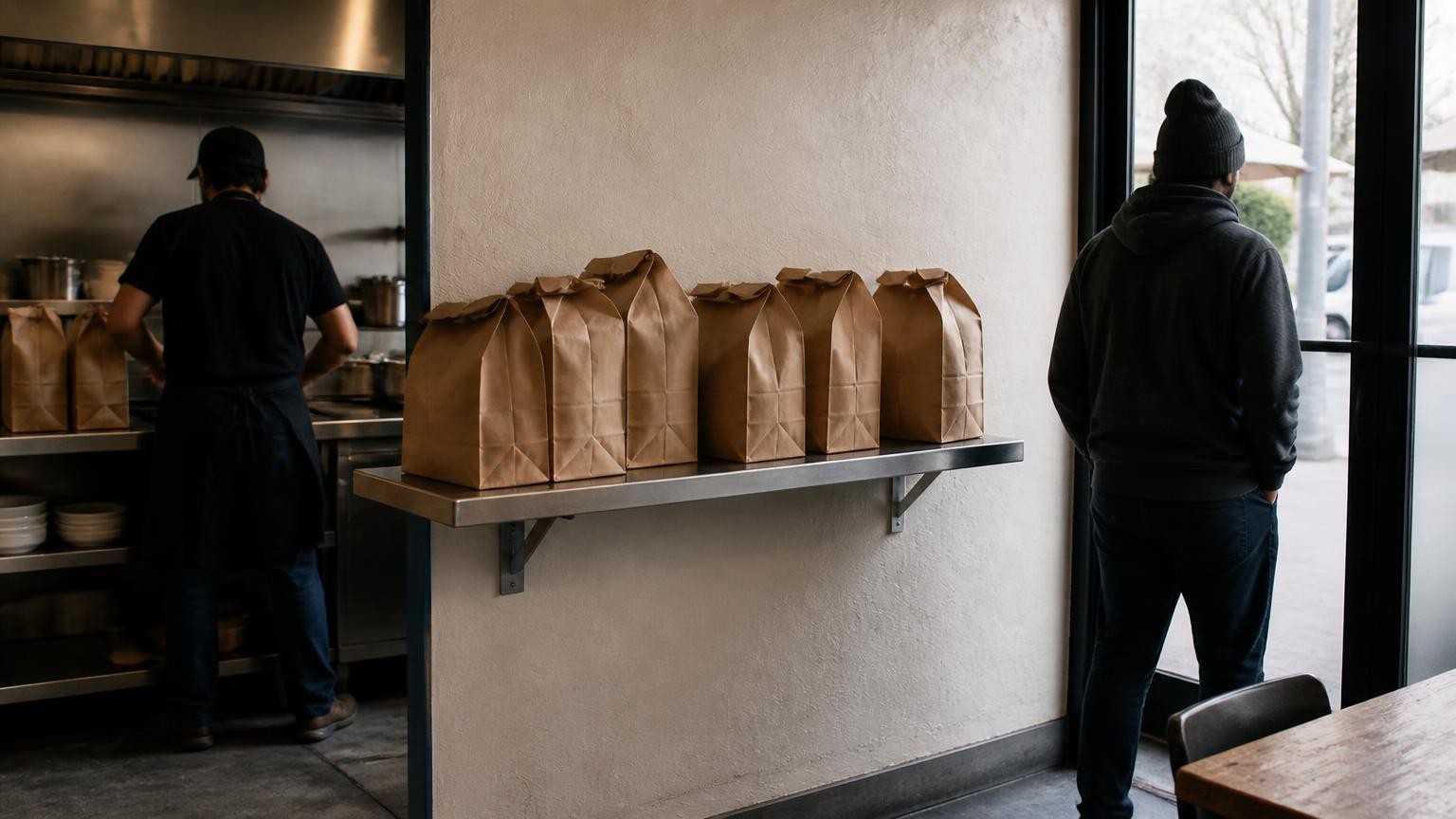
| Pickup shelf or bag | The guest has the food and can scan later | A card with a QR code leading to your own short form | A form that asks for more than a number |
| Waitlist or host stand | The guest has time to spare | A sign with a QR code | Handing over a form just as the table is ready |
For guests who come through delivery apps, our article on getting customers to order directly covers bag cards and what to check in your merchant agreement.
Give staff one sentence and one rule: a no ends the conversation. Let them skip the ask when the line is long, since you can ask on the next visit and you can't take back a pushy moment.
Then check what your POS does on its own. If a screen appears on every sale, the guest is asked on every sale, whatever you told your staff. Toast says its automatic enrollment prompts can be turned off for cash and for credit card payments, which puts the ask back in your team's hands. Look for the same setting on other systems.
Be careful with per-sign-up bonuses for staff. They bring in names, including guests who said yes to end the conversation, so score any contest on new members who come back.
What should a guest get for saying yes?
Something specific, right away. "Join our rewards" asks the guest to imagine the value. "This coffee counts, and your tenth is free" shows it.
The most useful evidence we found comes from a real coffee counter. In a field experiment by Ran Kivetz, Oleg Urminsky and Yuhuang Zheng, published in the Journal of Marketing Research in February 2006, 108 customers of a Columbia University cafe were randomly given either a 10-stamp card or a 12-stamp card with two bonus stamps already on it. Both took 10 purchases to earn a free coffee. The head-start group finished in 12.7 days on average against 15.6 days, nearly three days or 20% faster. The same paper found that members of that cafe's program bought more often as they neared the free coffee.
That is one campus cafe, and it measured how fast members finished, not how many joined or how anyone felt about being asked. Still, it suggests a few practical moves:
- Give a head start instead of a discount. Those two stamps changed nothing about the reward's cost, because the card grew by two and both took 10 paid coffees. A discount on this visit's check comes off your margin, including from guests who would have paid anyway. Work out what a reward really costs before you choose one.
- Name the first reward and keep it close. A free latte a few visits away gives staff something to say. "Points" gives them nothing.
- Ask for one detail. Toast recommends a phone number over email as the sign-up method. Birthday and email can come later, each with its own reason, such as a birthday treat.
How do you get guests to download the app without pushing it?
First decide whether you need one, which our comparison of branded apps and text clubs covers. If you have one, treat it as a second step, after the guest already knows you.
Many guests are open to it, older ones less so. In the National Restaurant Association's report, 74% of consumers said they would order and pay through a smartphone app if a local restaurant, coffee shop, snack shop, deli or fast food place offered it, and 54% of baby boomers said so. A restaurant's website scored 70% overall and 60% among boomers. That is stated intent and says nothing about installs, but it is a good reason to keep website ordering open to everyone.
- Offer the app when it solves something. A guest on a second or third order has just retyped their details, which makes "Save your usual order" an easy offer. That timing is our judgment.
- Carry everything over. A guest who joined with a phone number and opens the app to a zero balance has a reason to delete it. Ask your vendor to show you the same number bringing up the same points.
- Never make it the only way in. Earning by phone number at the register and ordering on your website stay available.
- Let a sign do the asking. A QR code on the receipt, the table or the pickup shelf lets a guest install later. Staff shouldn't be walking someone through an install while others wait.
- Keep the menu reachable. A full-screen "get our app" banner stands between a hungry guest and your food.
The notification prompt is the easiest part to waste. Apple's developer documentation says the system prompts the first time an app asks, records the answer and doesn't prompt on later requests. It advises asking in a context that shows why, and says this gives a better experience than asking automatically on first launch. For a restaurant, the obvious moment comes right after a first order, when "Tell me when it's ready" explains itself. Apple also offers provisional notifications, delivered quietly to Notification Center with buttons to keep or turn them off. Ask your vendor when its prompt appears, on iPhone and on Android, and whether it uses the provisional option.
If you would rather not build an app, a hosted community is another route. One you can look at is cirQQles, which publishes this blog, through its Q-Bite product for restaurants. Guests opt in to the restaurant's own branded community in the company's mobile app, join with an email, a phone number or a Facebook or Google account, and can leave whenever they want. Its FAQ says they join through a link, a QR code, a social post or the restaurant's website. Its restaurant page describes a website plug-in where guests order, reserve and buy without leaving the restaurant's site, and a host-stand tablet where members check in with a phone number and new members can sign up. Its pricing page, as read on November 4, 2026, lists an invite kit of cards, QR signage and links on the Base and Growth plans only.
Q-Bite for restaurants: cirqqles.com/q-bite
Plans as listed: pricing page
How do you ask for texts and email without overstepping?
Treat them as separate questions from joining. "Earn points with your number" and "text me offers" are two different requests, and a yes to the first is not a yes to the second. Text only guests who opted in.
Make the second ask as plain as the first. Say what you will send and roughly how often, for example "specials, about twice a month," and then keep to it.
Federal rules are another reason to keep the two apart. 47 C.F.R. § 64.1200 defines prior express written consent for autodialed marketing messages as a signed agreement, which may be electronic, with a clear and conspicuous disclosure that includes telling the person they don't have to agree as a condition of buying anything. It also says a reply of "stop," "quit," "end," "revoke," "opt out," "cancel" or "unsubscribe" is a way to revoke consent, and that requests must be honored within a reasonable time of no more than 10 business days. Whether your texting tool falls under this, and whether a bonus for signing up to texts changes anything, is a question for your attorney, since this article isn't legal advice.
Check one more thing in your system: a guest who opts out of messages should keep their points. If leaving the text list wipes a balance, you have punished someone for saying no. Test it with your own number.
How can you tell whether you are annoying people?
The sign-up count won't tell you, so watch what sits around it:
- Yes rate by shift and by person. If one employee's rate is far above everyone else's, check whether those members come back.
- Return visits by new members. A yes given to end a conversation shows up as a member who never returns.
- Opt-outs after each send. Sort them by message type, so you can see which send caused a jump.
- What staff hear. Ask before each shift whether anyone pushed back about being asked.
Nobody can tell you in advance how many guests will join, so use your first month as the baseline and change one thing at a time. To see whether the program changes what guests do, beyond attracting people who were already loyal, use the hold-back test in our article on winning back lapsed customers.
Frequently Asked Questions
Should I give a discount for joining a loyalty program?
Not by default. A head start on the first reward, such as two bonus stamps on a 12-stamp card, gives the guest something at once without lowering the check. In the cafe experiment above, both cards took 10 paid coffees, so the reward cost the same either way.
How often can staff ask the same guest to join?
Once a visit at most, and not again after a clear no unless the guest brings it up. We found no published standard, so treat this as judgment. If your POS prompts on every sale, that prompt counts as asking too.
What if a guest wants the points but not the app?
Give them the points. Toast, for example, says points are recorded through a phone number, email address or linked credit card. Mention the app on the receipt and leave the decision to the guest.
Should I enroll guests automatically when they order online?
It removes a question, and it also removes a choice. If your system does this, say so plainly at checkout and make sure earning points doesn't also sign the guest up for marketing. Have your attorney look at the wording.